What is Biodegradable Tableware? A Complete Guide to Eco-Friendly Dining
Every year, billions of plastic plates, foam cups, and synthetic cutlery end up in landfills and oceans — taking hundreds of years to break down. As consumers and businesses seek greener alternatives, biodegradable tableware has emerged as one of the most impactful and practical solutions. But what exactly is it, and why should you make the switch?
Every year, billions of plastic plates, foam cups, and synthetic cutlery end up in landfills and oceans — taking hundreds of years to break down. As consumers and businesses seek greener alternatives, biodegradable tableware has emerged as one of the most impactful and practical solutions. But what exactly is it, and why should you make the switch?
In this guide, we break down everything you need to know — from the materials and science behind it to real-world benefits and how Aaroyaa is leading India's sustainable dining revolution.
1. What is Biodegradable Tableware?
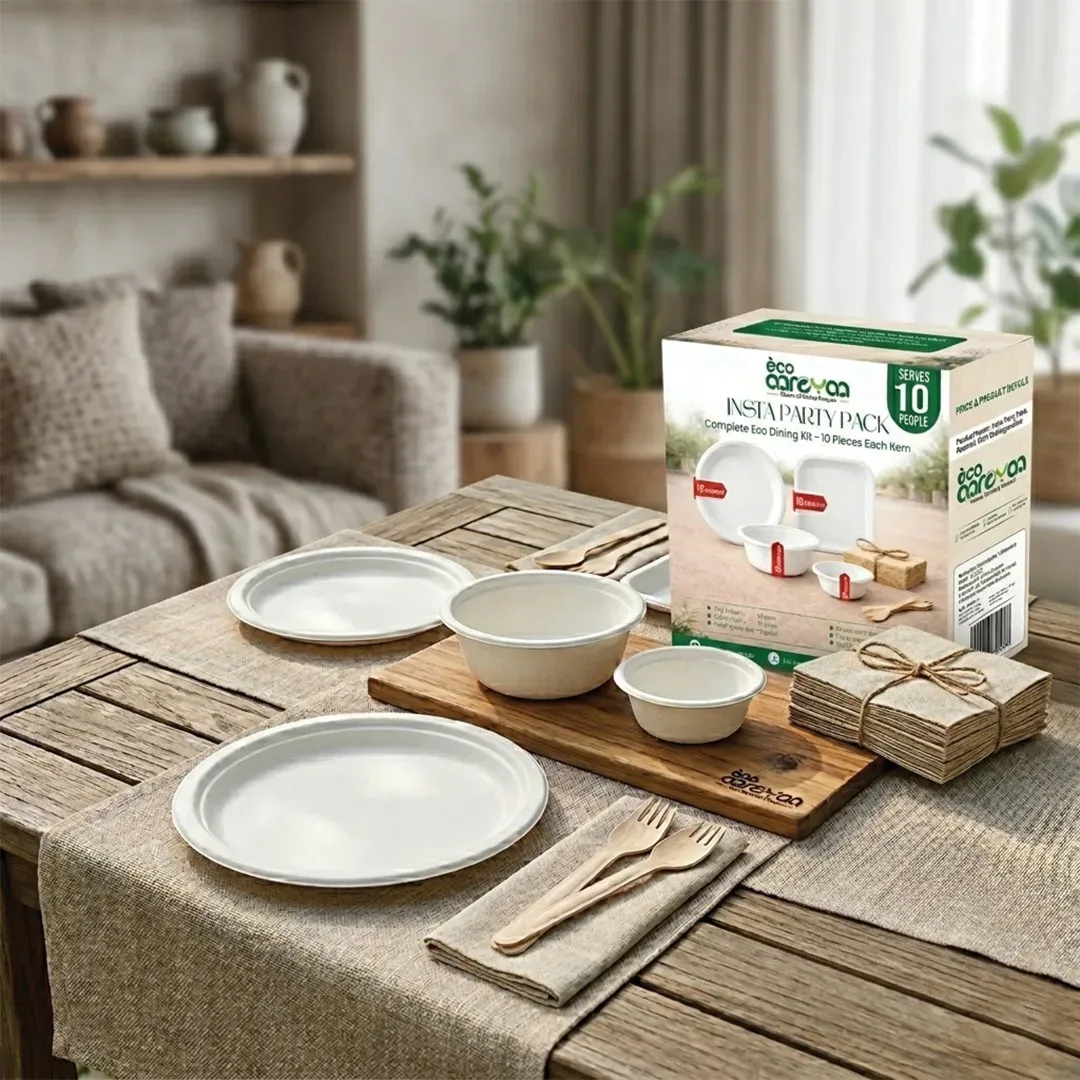
Biodegradable tableware refers to plates, bowls, cups, trays, and cutlery made from natural, plant-based materials that can decompose on their own when discarded. Unlike plastic or Styrofoam alternatives, biodegradable products break down through biological processes — returning safely to the earth within weeks or months without releasing harmful toxins.
The term 'biodegradable' means the product can be broken down by bacteria, fungi, and other living organisms under natural conditions. When paired with 'compostable,' it means the breakdown process produces nutrient-rich compost that can even benefit soil.
2. What Materials Are Used?
The most common and eco-certified materials for biodegradable tableware include:
• Sugarcane Bagasse — The fibrous leftover after sugar extraction. It is heat-resistant, sturdy, and decomposes in 60–90 days. This is one of Aaroyaa's primary materials.
• Areca Palm Leaf — Naturally fallen leaves from the areca palm tree are collected and hot-pressed into plates and bowls. Zero cutting of trees, zero chemicals.
• Bamboo — Rapidly renewable grass that produces durable, lightweight cutlery and containers.
• Wheat Straw — The stalk left after wheat harvesting; used to produce sturdy, heat-safe disposable ware.
• PLA (Polylactic Acid) — A plant-derived bioplastic, typically from corn starch. Requires industrial composting to biodegrade.
Aaroyaa focuses on bagasse and areca leaf — both are agricultural byproducts that require minimal processing and no harmful chemicals.
3. How is Biodegradable Tableware Made?
The manufacturing process varies by material, but for Aaroyaa's products:
• Raw sugarcane bagasse or areca leaves are collected after harvest or natural shedding.
• The material is cleaned, sanitised, and dried thoroughly.
• It is then moulded under high heat and pressure into the desired shape — plates, bowls, trays, cups.
• No bleach, no dyes, no plastic coatings are used. The result is 100% food-safe tableware.
• Products are quality-tested for leak resistance, heat tolerance, and durability before packaging.
The entire process is women-led at Aaroyaa — empowering local artisans while protecting the planet.
4. Key Benefits of Biodegradable Tableware
• Eco-Friendly: Decomposes in 60–90 days vs. 500+ years for plastic.
• Food-Safe: Free from BPA, PFAS, and harmful chemicals. Safe for hot and cold foods.
• Heat-Resistant: Aaroyaa products handle temperatures up to 200°C — perfect for hot curries, soups, and biryanis.
• Leak-Proof & Sturdy: No bending, no soggy bottoms — engineered for real meals.
• Compostable: Breaks down into nutrient-rich matter that improves soil health.
• Aesthetic: Natural textures and finishes look beautiful for events, restaurants, and everyday use.
• Supports Women: Every Aaroyaa product supports 50+ women artisans in India.
5. Biodegradable vs. Compostable vs. Recyclable — What's the Difference?
• Biodegradable: Breaks down naturally through biological processes. Does not need an industrial facility. Examples include areca leaf plates and bamboo cutlery.
• Compostable: A step further — breaks down faster and enriches soil with nutrients. Aaroyaa's bagasse bowls and trays fall into this category. Some compostable products may need industrial composting facilities.
• Recyclable: Materials like glass and metals can be processed and reused, but do not break down naturally and require dedicated recycling infrastructure.
In short, all compostable products are biodegradable, but not all biodegradable products are compostable. Recyclable products are neither — they depend on human-managed systems, not nature.
6. Who Should Use Biodegradable Tableware?
Biodegradable tableware is ideal for:
• Restaurants & Cafés looking to reduce their environmental footprint and attract eco-conscious customers.
• Event Organisers — weddings, corporate events, festivals where single-use ware is unavoidable.
• Households wanting to go plastic-free for parties, picnics, or everyday takeaways.
• Cloud Kitchens & Food Delivery services switching from plastic packaging to sustainable alternatives.
• Schools & Institutions committed to teaching and practising sustainable habits.
Aaroyaa offers bulk order discounts of up to 25%+ for businesses and event planners across India.
7. Why Choose Aaroyaa for Biodegradable Tableware?
Aaroyaa is India's women-led eco-tableware brand, founded by CA Megha Agrawal with a mission to merge sustainability with social empowerment. Here's what sets Aaroyaa apart:
• 100% biodegradable & compostable — zero plastic, zero chemicals.
• Microwave-safe and oven-safe up to 200°C.
• Decomposes in 60–90 days — home compostable.
• Proudly Made in India by 50+ women artisans.
• Available on Amazon, Flipkart, and Swiggy Instamart.
• Free shipping on orders above ₹1,499.
• 7-day hassle-free returns.
From dip cups and sporks to 7-compartment meal trays, Aaroyaa's range covers every dining need — beautifully and sustainably.
Conclusion
Biodegradable tableware isn't just a trend — it's a necessity. As the world grapples with plastic pollution, choosing plant-based, compostable alternatives is one of the most direct actions individuals and businesses can take to protect our planet.
With Aaroyaa, you're not just buying a plate — you're supporting women, reducing waste, and choosing a better tomorrow. From nature, back to nature.
Frequently Asked Questions
Common questions related to this article.
Is biodegradable tableware really safe for hot food?
Yes! Aaroyaa's biodegradable tableware made from sugarcane bagasse and areca leaf is fully food-grade and heat-resistant up to 200°C. It can safely hold hot curries, soups, biryanis, and gravies without leaking, warping, or releasing any harmful substances. It is also microwave-safe, making it perfect for everyday use
How long does biodegradable tableware take to decompose?
Aaroyaa's products decompose naturally within 60 to 90 days under normal composting or soil conditions. This is in stark contrast to plastic plates and cups, which can take 400–500 years to break down. You can even add used Aaroyaa tableware to your home compost bin — it will break down and enrich your garden soil.
Can businesses order biodegradable tableware in bulk from Aaroyaa?
Absolutely. Aaroyaa offers a dedicated bulk ordering programme for restaurants, cafés, hotels, cloud kitchens, and event organisers. Volume-based discounts go up to 25% or more, and custom branded packaging is available starting at 2,000 units. You can reach the team at ecommerce@aaroyaa.com or visit aaroyaa.com/bulk-orders for more details.
More stories from Aaroyaa
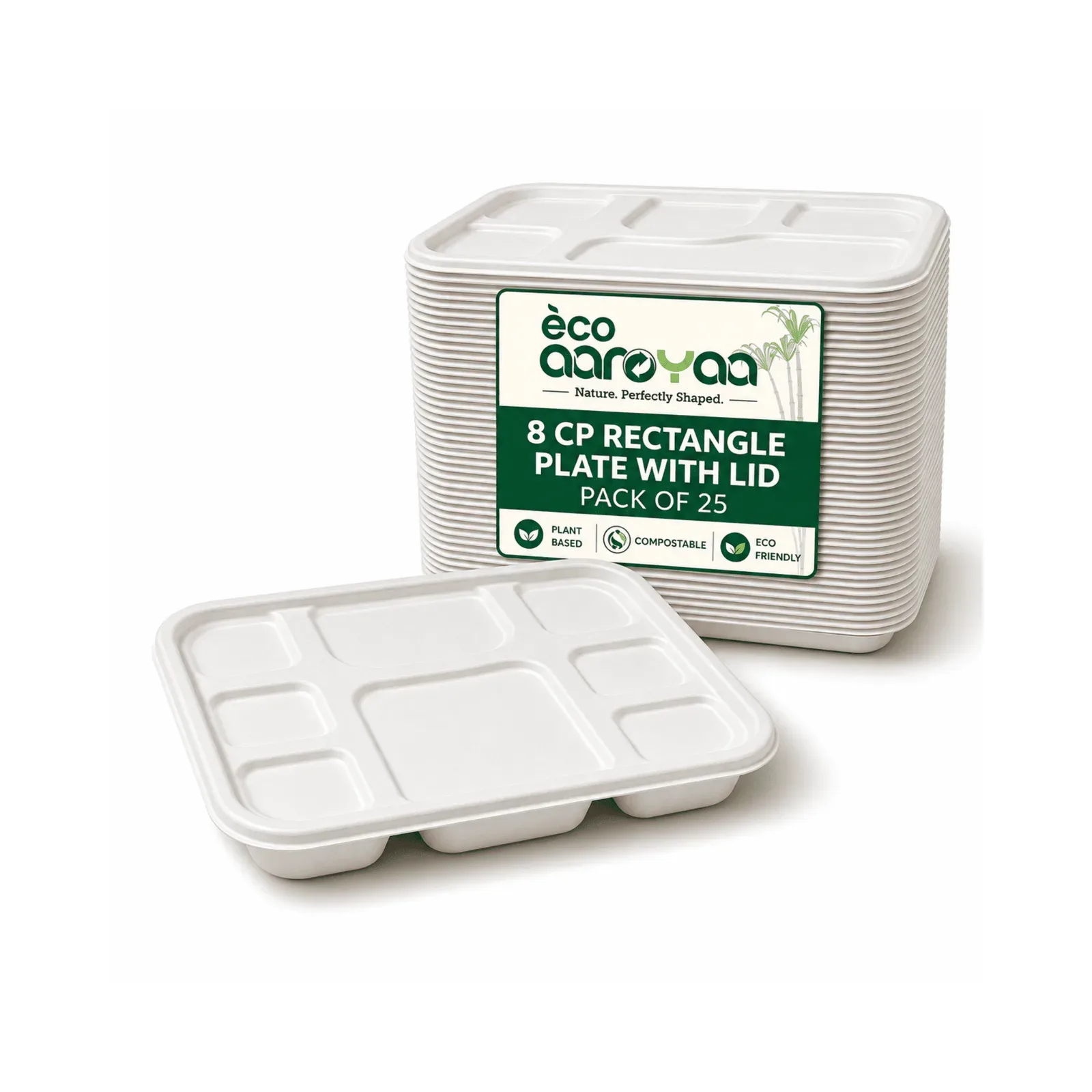
Aaroyaa 8 CP Rectangle Plate with Lid: The Ultimate Eco-Friendly Meal Packaging Solution
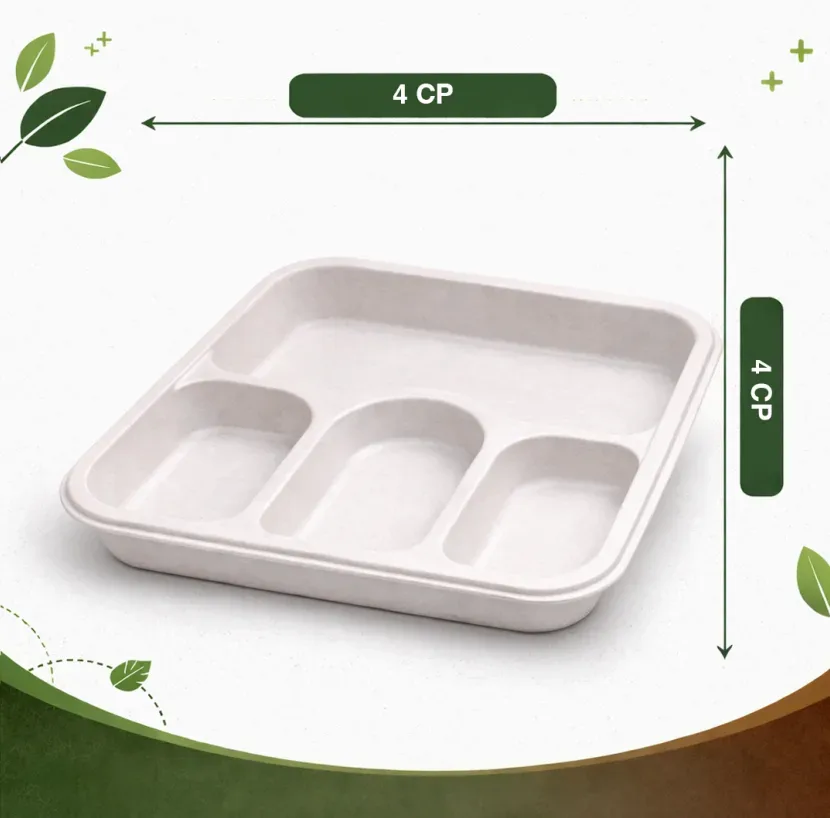
Aaroyaa 4 CP Plate: The Perfect Eco-Friendly Solution for Organized Dining